Develop Self-Directed Learners
We help children understand how they learn and gradually take ownership of their growth — through projects, reflection, and real challenges.

The Big Idea
EduNeuro develops the human abilities that become more valuable as technology and AI grow more powerful — so children can learn, think, create, and adapt on their own.
Like a global learning organization, we combine human development, institutional partnership, and accessible pathways — so more children become capable, confident self-learners.
We help children understand how they learn and gradually take ownership of their growth — through projects, reflection, and real challenges.
We equip parents, educators, and learning centres with frameworks and journeys that build global competence — curiosity, collaboration, and creation.
Hands-on programs, open resources, and community learning make STEM, human skills, and AI literacy reachable beyond elite institutions.
Children are entering a future where information is instant, AI can answer and write, jobs will keep changing, and memorizing facts matters less every year.
The ability to learn may become more important than what you already know.
Can your child learn something they have never been taught before?
This question is the foundation of EduNeuro.
Not tuition. Not another school. Not a collection of classes.
EduNeuro is designed to help children understand how they learn and gradually become capable of directing their own learning — through meaningful projects, mentor guidance, and reflection.
The core visual framework of EduNeuro — every learning journey maps to these interconnected domains.
They may need to learn science, mathematics, research, design, communication, technology, and teamwork — because the project requires it, not because a textbook said so.
We call them Learning Journeys — not courses. Each pathway develops multiple framework capabilities through hands-on work.
Observation, questions, storytelling, and hands-on exploration.
Explore Logic Lab →Projects, research, collaboration, and digital exploration.
Explore Robotics →Complex challenges, critical thinking, research, AI tools, and team work.
Stage 2 Robotics →Entrepreneurship, technology, leadership, portfolios, and SDG projects.
Join a pilot →Raising kids who thrive through challenge — with Gangotri Soneji, Psychologist & Educational Consultant.
Start the journey →Specialized destinations for study resources, maker tools, and school STEM programs — each built to extend the EduNeuro learning mission.
Academic resources for GTU students — question papers, guides, and study support.
www.gtupedia.com → Maker StoreCurated STEM kits, robotics hardware, and hands-on learning products.
www.tinkerstore.com → STEM LabsSchool STEM lab solutions, robotics kits, and innovation programs.
www.tinkerverse.in →| Human Skills | Thinking Skills | Learning Skills | Future Skills |
|---|---|---|---|
| Empathy | Critical thinking | Curiosity | AI literacy |
| Communication | Systems thinking | Research | Digital fluency |
| Collaboration | Problem-solving | Reflection | Adaptability |
| Creativity | Decision-making | Self-direction | Technology creation |
| Resilience | First-principles thinking | Learning agility | Entrepreneurship |
They need the confidence and capability to figure things out — with guidance, not control.
At EduNeuro, we help children develop:
When AI can do more, children must learn to ask better questions, exercise judgment, create with agency — and become builders, not passive consumers.
Technology should amplify thinking, not replace it. Read The AI Future →
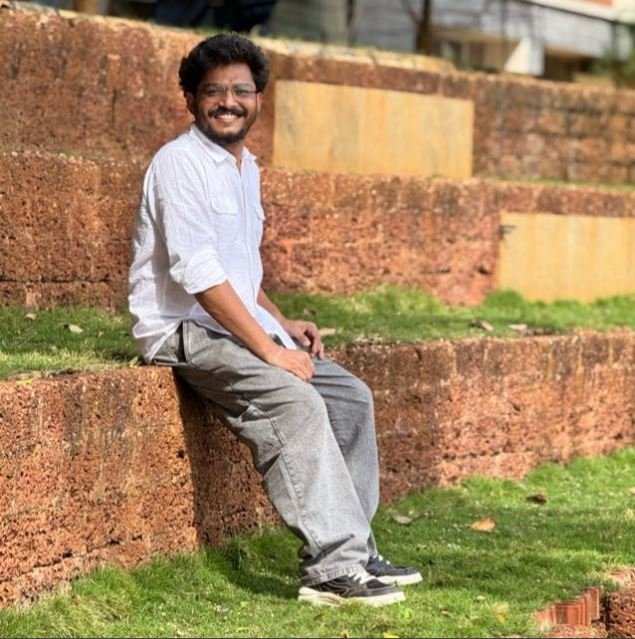
Educator · Learning Designer · Builder of Self-Learning Systems
Dhruv started questioning traditional education when he saw children memorizing answers for tests — but freezing when faced with something new. EduNeuro grew from years of working with children through tinkering, digital fabrication, project-based learning, and building systems that help learners direct their own growth.
Read the EduNeuro BookBook a conversation, join a program, or explore a pilot — however you enter, the goal is the same: a child who can learn what they have never been taught before.